

Ministers discuss the cultural programme of the Year of Lithuania in Germany to strengthen bilateral ties
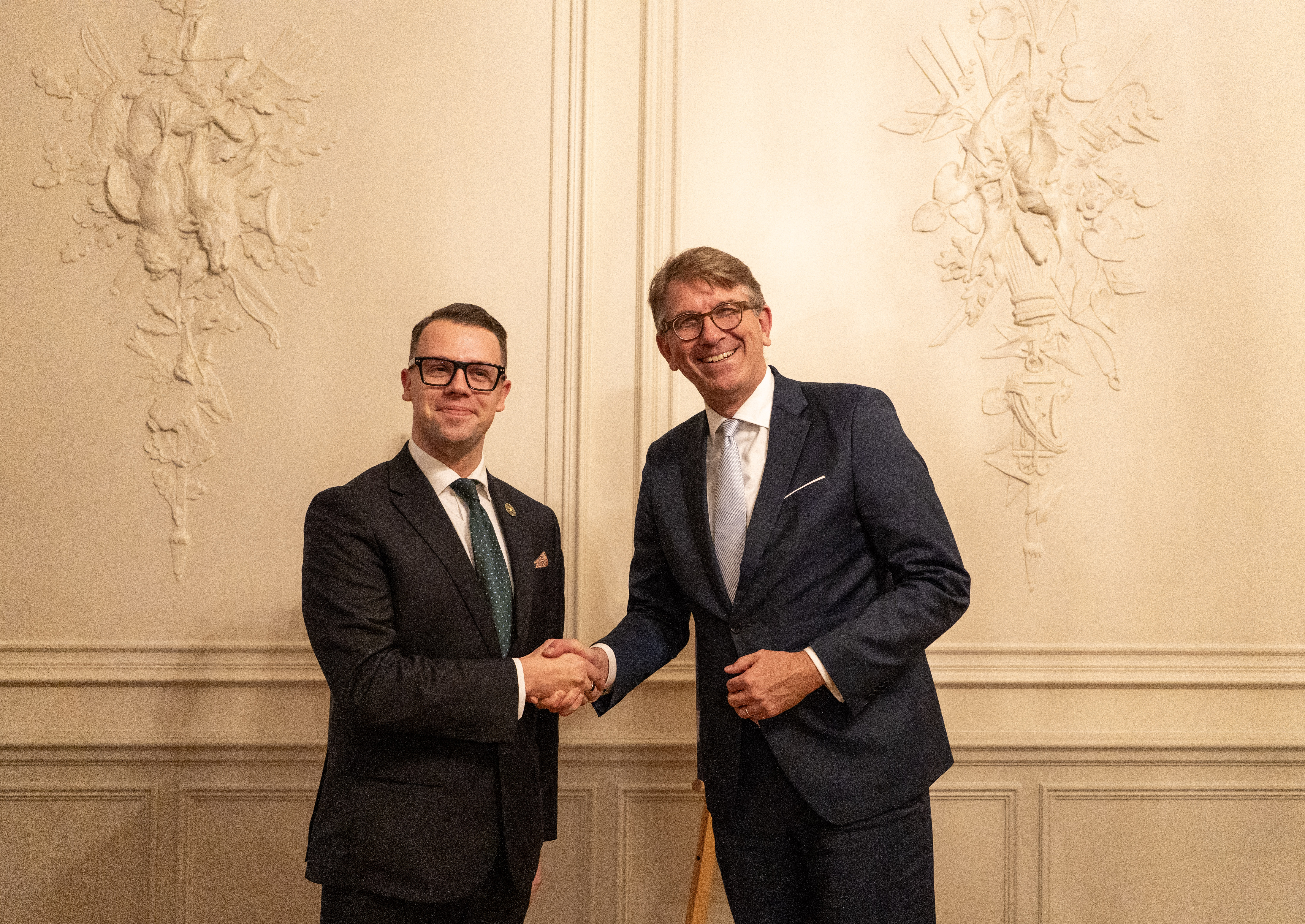
On 19 November, on the eve of the European Union Foreign Affairs Council (Education, Youth, Culture and Sport), Lithuanian Minister of Culture Lukas Alsys met with Germany’s Minister of State for Culture and the Media, Dr Wolfram Weimer, in Brussels. The main focus of the meeting was Lithuania’s Year in Germany cultural programme (2027–2028) and the strengthening of cultural cooperation between the two countries.
Under the slogan “Litauen. So Nah. So Neu.” (Lithuania. So Close. So New.), Lithuania’s Year in Germany programme will encompass initiatives aimed at strengthening ties between Lithuania and Germany across various fields, including culture.
“Against the backdrop of Russia’s war against Ukraine and growing geopolitical tensions, strong ties between Lithuanian and German societies are essential for Europe’s security, solidarity and resilience as a whole. Lithuania’s Year in Germany and its accompanying cultural programme provide an exceptional platform for artists from both countries to meet, learn from one another and build lasting cultural connections. These cultural partnerships will help German audiences discover new dimensions of our country, while enabling us to further strengthen our societal ties with one of our most important strategic partners,” Minister L. Alsys emphasised.
The first half of 2027 of Lithuania’s Year in Germany cultural programme will coincide with Lithuania’s Presidency of the Council of the European Union. The programme for this period has already been planned and forms an integral part of Lithuania’s Year in Germany cultural programme. It will feature 64 events across nine German federal states and ten cities. The programme will open with a festive concert at the Elbphilharmonie in Hamburg, featuring Asmik Grigorian, Edgaras Montvidas and the Lithuanian National Symphony Orchestra, conducted by Giedrė Šlekytė. German audiences will also have the opportunity to discover Lithuanian contemporary dance, jazz and experimental music, sound art and literature. Lithuanian contemporary music will also feature at the 25th edition of the “MärzMusik” festival in Berlin. This programme is funded by the Ministry of Foreign Affairs, with an allocated budget of EUR 450,000.
The subsequent programme will be developed in accordance with the approved concept of Lithuania’s Year in Germany, with projects selected through competitive funding calls. The cultural programme will focus on three thematic pillars: time, spaces and people. Artists from both countries will be encouraged to explore themes of individual and collective memory, public spaces, community empowerment and diversity. Particular attention will be paid to establishing long-term institutional partnerships and actively involving young professionals in decision-making and creative processes.
A budget of EUR 2.2 million has been allocated for 2027–2028 to implement Lithuania’s Year in Germany programme, coordinated by the Lithuanian Culture Institute together with its partners.
During the meeting, L. Alsys also presented Dr W. Weimer with the priorities of Lithuania’s Presidency of the Council of the European Union in the first half of 2027 and personally invited the German minister to attend the informal meeting of EU Ministers of Culture, which will take place in Vilnius in early March. The Lithuanian Presidency’s agenda will focus on the role of culture in strengthening democratic resilience, protecting cultural heritage in times of crisis, and the contribution of the cultural and creative sectors to Europe’s competitiveness. These themes will also feature prominently at other key events hosted by Lithuania during its Presidency, including the EU Library Policy Forum and an expert-level conference on the cultural and creative industries.
Minister L. Alsys emphasised the importance of close cooperation with Germany in implementing the ambitious European legislative agenda. Among Lithuania’s key Presidency objectives is the aim to conclude negotiations with the European Parliament on the “AgoraEU” programme and the European Capitals of Culture initiative. Work will also continue on the European Heritage Label, the “EU Kids Act” regulation and the Audiovisual Media Services Directive.
Photo: Permanent Representation of Lithuania to the European Union