

Nomination application “Tradition of Straw Gardens” submitted to UNESCO
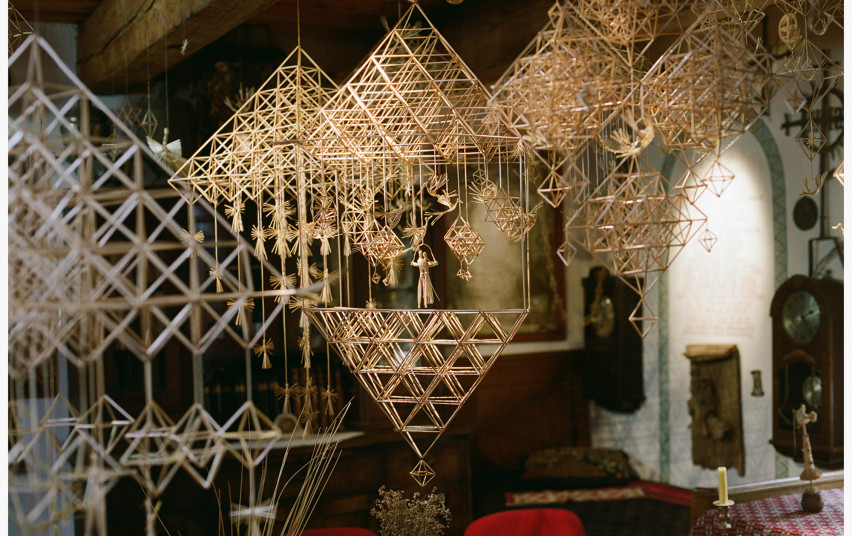
Today the Ministry of Culture has submitted the nomination application of the tradition of straw gardens in Lithuania to the UNESCO Representative List of the Intangible Cultural Heritage of Humanity.
“By submitting the nomination application of the tradition of straw gardens to UNESCO, Lithuania has committed to continue to preserve, promote and develop this tradition in the future. Three values submitted by Lithuania have already been added to the UNESCO Representative List of the Intangible Cultural Heritage of Humanity: cross-crafting and its symbols in Lithuania, the tradition of dance and song festivals in the Baltic states, and sutartinės: the Lithuanian polyphonic songs. We aim for the tradition of straw gardens to become the fourth one”, the Vice-Minister of Culture Albinas Vilčinskas said.
The application was prepared by a working group assembled under the instructions of the Minister of Culture Simonas Kairys at the Lithuanian National Culture Centre whose members included specialists from the Lithuanian National Culture Centre, the secretariat of the Lithuanian National Commission for UNESCO and the Vilnius Ethnic Culture Centre, experts from the A. and J. Juškos Ethnic Culture Museum, the National Museum of Lithuania and the Lithuanian Institute of History, and members of the non-governmental organisation and association Dangaus Sodai. As part of the application, a 10-minute film (directed by Donatas Simaitis) was created which introduces the tradition: https://www.youtube.com/watch?v=g7iks5yz9c4.
The application will be evaluated by an international commission of UNESCO experts. The first preliminary assessment and remarks on the application are expected to come until June 2023, the commission’s summarised recommendations for the Intergovernmental Committee for the Safeguarding of Intangible Cultural Heritage are expected before November 2023, and the final decision by the Intergovernmental Committee for the Safeguarding of Intangible Cultural Heritage is expected in November or December of 2023.
During the selection of values for the UNESCO Representative list, 5 criteria are applied: the compatibility with UNESCO’s concepts of intangible cultural heritage, global and integral cultural diversity and human creativity; the justification of long-term plans of preservation measures; the inclusion of the tradition’s preservers and nurturers in the preparation of the application and their voluntary and early consent to submit the application; the inclusion in Lithuania’s Inventory of Intangible Cultural Heritage.
In 2017, the tradition of straw garden-crafting was recorded in Lithuania’s Inventory of Intangible Cultural Heritage. The tradition is widely nurtured and passed down in families, cultural centres, education institutions, communities of masters and amateurs. Exceptional families of multiple-generation straw garden-crafters reside in Jonava, Vilnius Region, Šakiai and Lazdijai districts. However, the tradition is a part of cultural heritage which is important to the entire Lithuania and reflects the connection to customs, worldview, spirituality, sustainability, and aesthetic values.
Straw gardens, which have also been called liktorius, voras, pajonkas, pajonkėlis, dangus, pasaulis, rojus, sietynas, reketukas, rekėžis, krijelis, aitvaras, žarondėlis, were crafted in the entire Lithuania and had not only decorative but also ceremonial significance. These crafted wares can have various forms but the most widespread is two pyramids with a shared base whose one tip is aimed at the top (the sky), while the other one aims down (to the underground). If the garden is spinning, it is a good omen, because it is believed that it purifies the home, fills it with good energy and harmony. Wedding gardens are commissioned to this day; they are also hung above baby cribs or family tables, they adorn homes in preparation of Christmas Eve, Easter and other holidays; they are also often used as a decorative element of the interior. The tradition is becoming increasingly relevant; many people perceive these items, which symbolize traditional worldview, as a significant symbol of cultural identity.
Exposition of straw gardens at the A. and J. Juškos Ethnic Culture Museum in Vilkija. Photo by Gintautas Trimakas (Archive of the Lithuanian National Culture Centre)
Last updated: 24-05-2022