

Minister of Culture Kairys in Brussels underscored the benefits of the European Media Freedom Act and urged greater inclusion of Ukrainians in EU activities
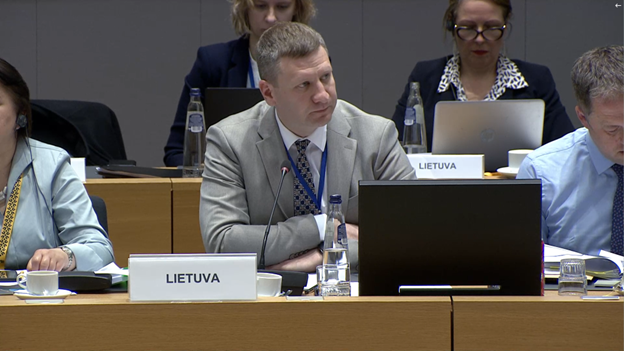
Minister of Culture Simonas Kairys participated in a meeting of the EU Council of Ministers of Culture in Brussels on 16 May, discussing the European Media Freedom Act and approving conclusions on protection of at-risk and displaced artists.
"The Media Freedom Act and its proposed instruments are important in the effort to maintain the EU's leading democratic position and the example it sets for countries seeking membership in it. Exactly 20 years ago, the citizens of Lithuania said "yes" in a referendum on joining this union of European countries, united by respect for human rights and democratic values. Striving for a democratic, strong and resilient Europe, we support this proposal and its general purposes. I believe that through our joint efforts, we can achieve the goal of making the European Media Freedom Act a part of European law in one year," said Minister of Culture Kairys.
The Minister emphasised the importance of the Act to Europe's democracy, noting the need to reinforce the media's freedom, independence and pluralism. He also highlighted the Act's significance in strengthening the united European response to disinformation from third countries, especially in the context of Russia's ongoing war of aggression against Ukraine and the never-ending propaganda and disinformation attacks. During the meeting, the EU ministers of culture approved the progress report on the proposed European Media Freedom Act.
In the EU Council of Ministers of Culture session, Minister of Culture Kairys called for greater inclusion of Ukrainians in EU activities related to Ukraine, to help them better understand the EU's operating principles and make full use of opportunities as they prepare for Ukraine's membership in the EU.
The EU Council of Ministers of Culture also approved the conclusions on at-risk and displaced artists. The crucial role that artists play in the life of societies was recognised in the document, as were artists' contributions to peace, freedom, democracy and cultural diversity. The need to take action to protect at-risk and displaced artists from threats or persecution due to their artistic work was underlined. The Council's conclusions paid special attention to Ukraine under Russian attack and to the condition of Ukraine's artists and other artists fleeing the war caused by Russia.
The Minister of Culture also met in Brussels with European Commissioner Virginijus Sinkevičius to discuss issues related to Ukraine's rebuilding in the context of the New European Bauhaus and opportunities for Lithuania and its experts to become more engaged in this process. The Minister and the Commissioner discussed a project initiated and coordinated by the Lithuanian Association of Architects and funded by the EU's Creative Europe Programme, U-RE-HERIT / Architektai Ukrainos paveldui: atkuriant atmintį ir tapatybę (U-RE-HERIT / Architects for Ukraine's heritage: restoring memory and identity). They also discussed the Davos Baukultur Alliance, in which Lithuania is actively participating.
Last updated: 29-05-2023