

The way to UNESCO – the Easter Palms (Verbos) and Christmas Eve (Kūčios) tradition
Intangible cultural heritage elements – Vilnius Verbos Easter Palms (Lithuania) and Christmas Eve Celebration in Lithuania, Poland and Ukraine on the way to UNESCO
The Ministry of Culture, in cooperation with the Lithuanian National Commission for UNESCO, the Lithuanian National Culture Centre, Vilnius District Municipality and other cultural institutions, has submitted two significant nominations for inscription on the UNESCO Representative List of the Intangible Cultural Heritage of Humanity (hereinafter “the Representative List”): Christmas Eve Celebration and Vilnius Verbos Easter Palms tradition. The decisions regarding the inscription of these elements on the UNESCO Representative List are pending and are expected to be taken during the 21st session of the UNESCO Intergovernmental Committee for the Safeguarding of Intangible Cultural Heritage, to be hosted in Xiamen, China. The nominations are currently being evaluated by international experts, with positive results expected in December 2026.
The Vilnius Verbos Easter Palms tradition represents a particular form of folk art and distinctive cultural and sacral practice of the Easter Celebration mostly spread within a radius of about 50 km northwest of Vilnius among craftswomen. In the villages on the right bank of the Neris River, some families of practitioners can trace even up to seven generations of palm weavers.
The tradition originates from Vilnius guilds and 17th-century St. Casimir processions. To this day, Vilnius Verbos Easter Palms became a symbol of the Kaziukas Fair — Lithuania’s largest and oldest folk art and crafts fair. As works of art, they are exhibited in galleries, evaluated in competitions, used to adorn both traditional and modern interiors, and serve as souvenirs representing not only Vilnius region, but also Lithuanian culture.
The Christmas Eve Celebration customs are widespread throughout the historical and cultural space of the former Polish-Lithuanian Commonwealth. Common features characteristic of this celebration – the preparations, making of special dishes, gathering of relatives and rituals– are culturally similar in the Lithuanian, Polish as well as Ukrainian societies. Lithuania initiated a trilateral nomination for the Christmas Eve Celebration in Lithuania, Poland and Ukraine. The application was signed by the Ministers of Culture of all three countries, and prepared in collaboration with numerous cultural institutions, heritage experts, museums, communities and NGOs from these countries
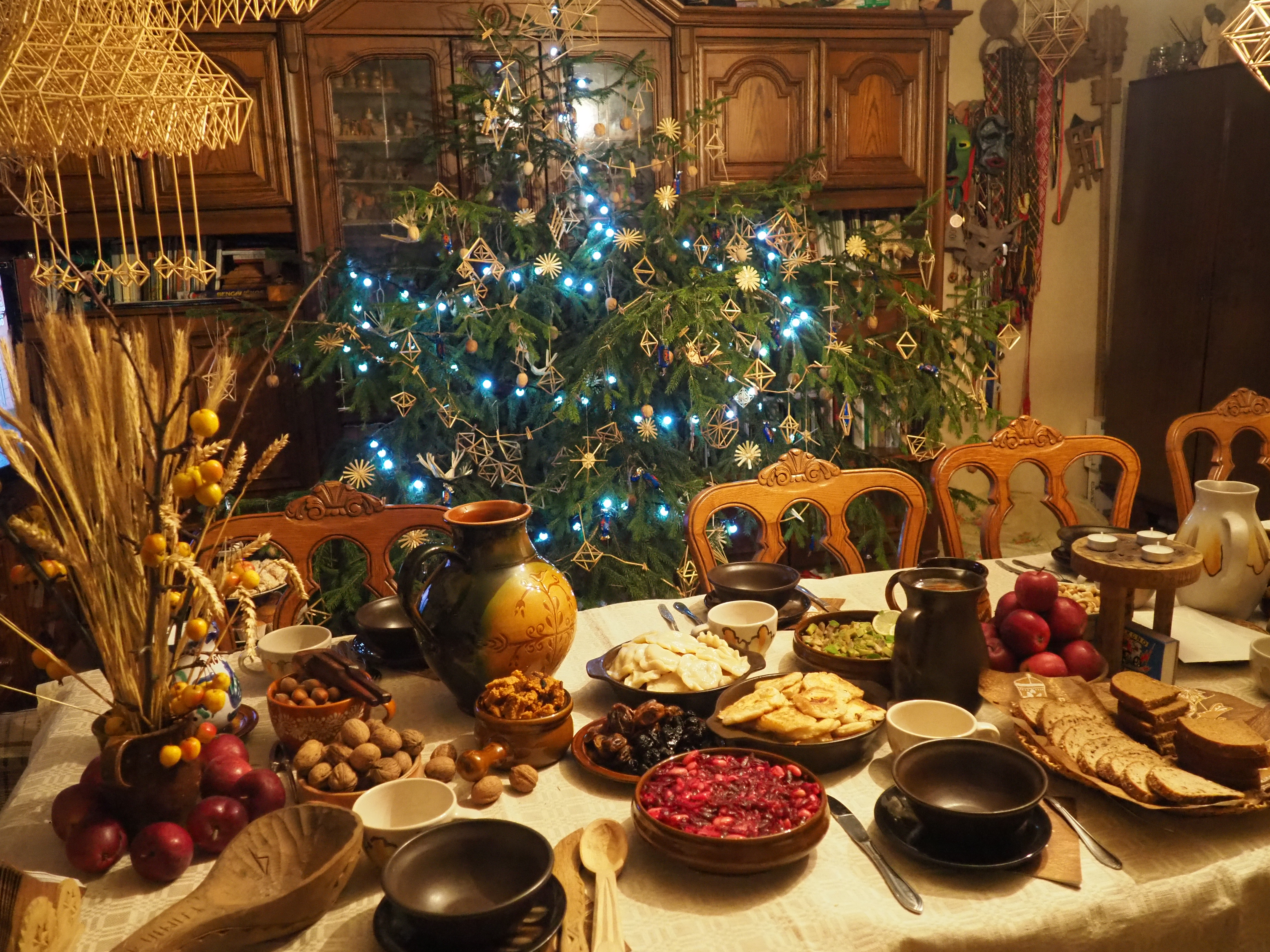
Photo by Artūras Narkevičius
The Christmas Eve Celebration and related customs despite confessional differences, are cherished by many people of different age, cultural identity or religious affiliation in Lithuania. It encompasses particular customs, symbolism and dishes intertwining pre-Christian traditions with those of various Christian denominations. Poland and Ukraine. The festive ritual of the Christmas Eve dinner celebrated on December 24 begins within the family, when the elders invite their family members to exchange blessings or good wishes and, depending on religious beliefs, share bread or a Christmas wafer and food. Certain dishes, such as kūčia/kutia/кутя (a dish of soaked or boiled grains, poppy seeds, and honey), kisielius/kisiel/kисіль (a gel-like drink), barščiai/barszcz/борщ (beetroot soup), as well as various dishes with carp and herring typical of Christmas Eve dinner in all three countries.
During the Christmas Eve dinner, 12 or more dishes are served on a table covered with a white tablecloth and some hay placed under it, on a plate, or in a small basket on the table. It is part of the Advent fasting time, and food consists of cereals, cooked, smoked, or fried fish, mushrooms, wild berries, nuts, apples, poppy or cannabis seeds, dried fruits, but all the dishes are without meat, animal fat, or dairy products. After dinner, something of every dish is left on the table for the souls of deceased family members. This tradition strengthens family and community bonds, the sense of unity and reconciliation.
Lithuania initiated the preparation of the nomination for the Christmas Eve Celebration in cooperation with Poland and Ukraine. The international expert group from the three countries began work in early 2024, developing a joint concept of the nomination and coordinating research, community involvement and documentation processes. The nomination was prepared through close cooperation between cultural institutions, research centres, museums, universities, NGOs and communities. Numerous communities, families and individual bearers of the tradition in Lithuania, Poland and Ukraine shared video footage recorded in their families or communities, or provided reports filmed for this specific purpose, which were included in the nomination file (LT, EN).
In Lithuania, the preparation of the nomination was coordinated by the Lithuanian National Commission for UNESCO and the Lithuanian National Culture Centre, in cooperation with research institutions such as the Lithuanian Institute of History, Institute of Lithuanian Literature and Folklore, Vilnius University, Vytautas Magnus University, National Museum of Lithuania, as well as regional cultural centres and museums. Similarly, in Poland and Ukraine, the process involved scientific and cultural institutions, including the Institute of Art of the Polish Academy of Sciences, Maria Curie-Skłodowska University in Lublin, ethnographic museums, as well as Taras Shevchenko National University of Kyiv, Rylsky Institute of Art Studies, Folklore and Ethnology in Kyiv, Ivan Honchar Museum and other organizations.
In preparing the nomination, major emphasis was placed on community engagement. In 2024, the initiative of the nomination was introduced to intangible cultural heritage specialists and cultural workers from various municipalities in Lithuania. In 2024–2025, surveys and consultations were conducted with communities, cultural organizations and bearers of the tradition in Lithuania, Poland and Ukraine. From November 2024 to February 2025, more than 1,200 individuals and dozens of cultural and scientific institutions expressed their support for the nomination and its submission to UNESCO.
The final trilateral nomination of the Christmas Eve Celebration tradition prepared by Lithuania, Poland and Ukraine for UNESCO Representative List of the Intangible Cultural Heritage of Humanity was submitted on 31 March 2025
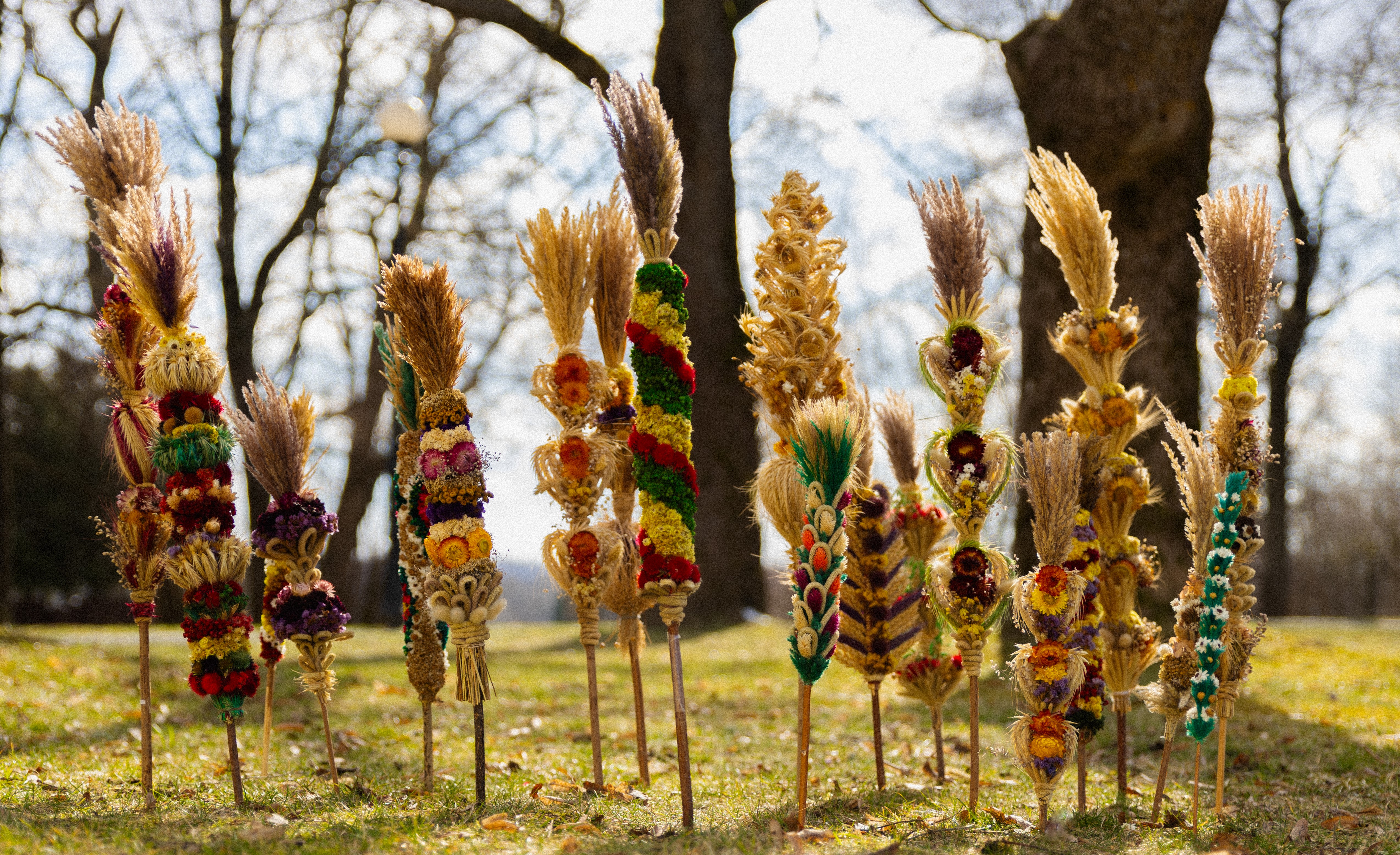
Photo by Bartosz Wojciech Urbanowicz
Vilnius Verbos Easter Palms are made on a hazel stick using dried plants and a specific weaving technique. These colorful palms of various shapes are not only an important Palm Sunday symbol consecrated in churches, but also a distinctive hallmark of Vilnius and St. Casimir (Kaziukas) Fair representing a particular form of folk art. The knowledge and skills of the tradition are passed on within families from generation to generation and also through active involvement of communities, folk artist unions and Vilnius Region Easter Palms Weavers Association. The Vilnius Verbos Easter Palms, as a work of art reflecting our relationship with the surrounding nature, decorate countless interiors, are displayed at international exhibitions and fairs, and, in a religious sense, serve as the primary symbol of Easter Palm Sunday – the celebration of Christ’s entry into Jerusalem
The nomination of Vilnius Verbos Easter Palms for the Representative List of the Intangible Cultural Heritage of Humanity was prepared by Vilnius District Municipality, in cooperation with the Easter Palms weavers’ communities, folk artists, cultural institutions and researchers. Vilnius Region Palm Weavers Association, Čekoniškės Ethnographic Museum of Verbos and Rural Life, Lithuanian National Commission for UNESCO, Lithuanian National Culture Centre, Union of Lithuanian Folk Artists, Vilnius Region Ethnographic Museum and other organizations were active contributors to the preparation of the nomination. The craftswomen and other supporters of the tradition shared their knowledge and insights in short videos that became part of the nomination (LT, EN).
The process of preparing the nomination of Vilnius Verbos Easter Palms was launched in response to the growing initiatives of local communities to safeguard this tradition. The Vilnius Region Palm Weavers Association, established in 2021, was an important step towards the consolidation of the community of practitioners. That same year, during the meeting of weavers held in Vilnius district, the community representatives signed a letter of intent confirming their readiness to cooperate in preparing the nomination and strengthening the safeguarding of the tradition. The preparation of the nomination was approved by the Council for Ethnic Culture and Intangible Cultural Heritage of the Ministry of Culture. Since 2022, representatives of communities, researchers and cultural organizations have been collecting material, documenting the tradition and systematizing the archival and research data. In summer 2024, palm weavers, researchers and cultural representatives discussed the status of the tradition and prepared the safeguarding measures. In January 2025, the Commission of the Inventory of Intangible Cultural Heritage of Lithuania and various specialists reviewed the nomination draft and video footage. The final nomination file was also submitted to UNESCO on 31 March 2025.
The preparation of these two applications were included in the Government Programme provisions implementation plan in order to achieve the priority “Mobilising the Lithuanian society to foster identity and reflect on historical memory”.
Additional information about UNESCO Lists of Intangible Cultural Heritage
UNESCO Lists of Intangible Cultural Heritage have become increasingly important tools for enhancing prestige and visibility, as well as strengthening the safeguarding of intangible cultural heritage worldwide. Currently, 849 elements are inscribed on the UNESCO Intangible Cultural Heritage Lists and safeguarded by different communities, groups and individuals in 157 countries, including Lithuania.
4 elements of intangible cultural heritage in Lithuania are already inscribed on the Representative List of the Intangible Cultural Heritage of Humanity: Cross-crafting and its Symbolism, Baltic Song and Dance Celebration, Lithuanian Multipart Songs (Sutartinės), and Straw Garden making tradition.
UNESCO Representative List of the Intangible Cultural Heritage of Humanity now features 98 multinational elements of intangible heritage shared by several countries or cultural communities. More than half (55) of them come from the Europe and North America region. UNESCO Intergovernmental Committee for the Safeguarding of the Intangible Cultural Heritage encourages the submission of joint applications of several countries to strengthen intercultural dialogue and global cooperation.
In 2008, a multinational nomination, the Baltic Song and Dance Celebrations in Lithuania, Latvia and Estonia were inscribed on the List, with Latvia being the initiator of the nomination. The Christmas Eve Celebration would become the first multinational nomination initiated by Lithuania and the second multinational element with Lithuania’s participation.
In recent years, countries have increasingly been submitting joint applications for related traditions, sharing experiences and developing joint plans for the safeguarding of traditions. This provides an opportunity for countries to demonstrate not only their cultural and historical bonds, but also their cooperation. The nomination process also actively engages communities, encouraging them to become experts in living heritage and to take responsibility for its safeguarding.
Contacts for inquiries:
Rugilė Puodžiūnienė, Cultural Heritage Policy Group Head, Ministry of Culture, email: [email protected]
Last updated: 14-05-2026